Every landlord eventually faces the same moment: staring at a shoebox full of receipts in March, wondering if that water heater replacement was February or January, and whether the property actually made money last year. The promise of rental property tracking software sounds appealing until you see the monthly fees that could pay for your next repair.
The reality is most rental property tracking software falls into two camps: oversimplified rent collection apps that ignore the messy reality of landlording, or enterprise property management platforms built for 100+ unit operations. Small landlords need something in between—tracking that handles vacancy, CapEx reserves, and Schedule E categories without requiring a property management degree.
What Rental Property Tracking Actually Needs to Track
Before evaluating any property management software, understand what numbers actually matter for small landlords. Your rent roll is just the starting point. Real cash flow tracking requires:
Operating expenses by Schedule E category: Advertising, cleaning, insurance, legal fees, management, mortgage interest, repairs, supplies, taxes, and utilities. The IRS Schedule E requirements don’t care about your creative expense categories—they want Schedule E format.
CapEx reserves separate from repairs: That roof replacement isn’t a repair—it’s capital expenditure. Your tracking needs to distinguish between fixing a leaky faucet ($50 repair) and replacing the HVAC system ($4,000 CapEx that gets depreciated over years).
Vacancy tracking: Empty months aren’t just zero income—they often involve extra expenses. Utilities, cleaning, advertising, and showing costs add up. A good rental expense tracker captures both the missing rent and the additional costs.
Cash-on-cash return calculation: Your actual cash invested includes down payment, closing costs, initial repairs, and reserves. Many landlords forget to include that $3,000 in move-in ready improvements when calculating CoC return.
Rental Property Tracking Software: The Reality Check
Most rental income tracking apps excel at collecting rent and sending late notices. They’re digital versions of the old rent book, which is useful but incomplete. Popular options like Stessa, Rentometer, or Zillow Rental Manager handle basic income tracking but fall short on detailed expense categorization.
Enterprise property portfolio management platforms like AppFolio or Buildium offer comprehensive tracking but assume you’re managing multiple properties with dedicated time for system maintenance. Monthly costs run $50-300+ per property, which eats into cash flow faster than a surprise plumbing bill.
The middle ground—landlord accounting software like Quicken Rental Property Manager or simply using QuickBooks—provides detailed tracking but requires learning accounting software. Many small landlords find themselves spending more time categorizing expenses than collecting rent.
Here’s what most software gets wrong: they optimize for portfolio management, not deal analysis. A small landlord needs to quickly see whether a property actually works, not manage 50 units across multiple markets.
Why Many Landlords Return to Spreadsheets
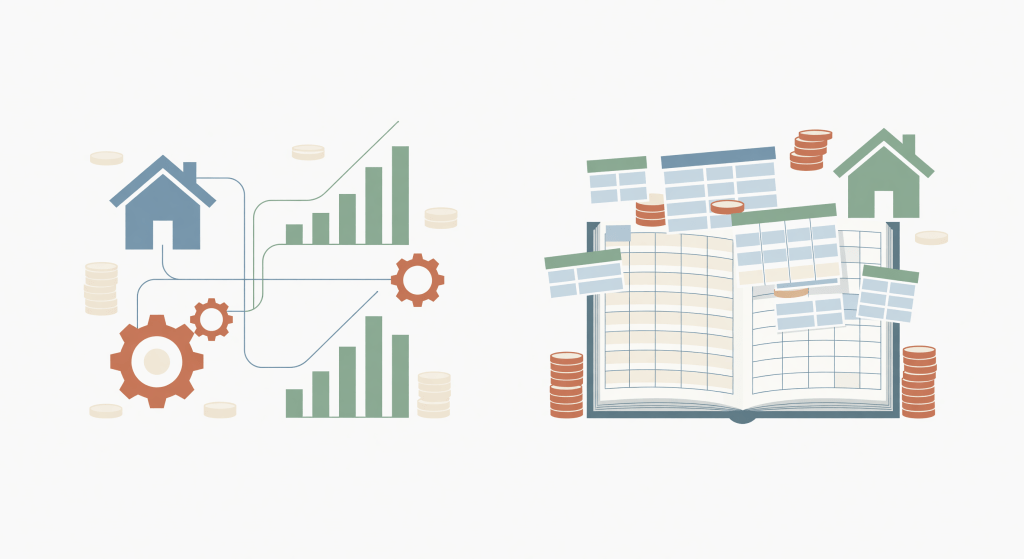
The dirty secret of rental property tracking: many successful small landlords use spreadsheets. Not because they’re cheap (though they are), but because spreadsheets match how small landlords actually think about properties.
A good landlord spreadsheet puts everything on one screen: monthly cash flow, year-to-date totals, cap rate calculation, and cash-on-cash return. No logging into separate portals or hunting through multiple reports to see if the property pays for itself.
Tenant management systems in software are useful for large portfolios but overkill for house hackers or small multi-unit owners. When you know your tenants by name, sophisticated tenant portals matter less than accurate expense tracking.
Spreadsheets also handle the reality that many rental decisions happen quickly. When evaluating a new property, you need cap rate and cash flow projections immediately, not after setting up a new property in your software system.
Real Estate Investment Software vs. Practical Tracking
The term “real estate investment software” covers everything from BiggerPockets calculators to institutional analysis platforms. For small landlords, the key question isn’t features—it’s whether the tool matches your actual workflow.
Most small landlords need three core functions: deal analysis (before buying), ongoing cash flow tracking (monthly reality), and tax preparation support (Schedule E categories). Software that excels at one often fails at the others.
Consider your actual usage patterns: Are you analyzing deals weekly or tracking expenses monthly? Do you need tenant communication features or just accurate NOI calculation? Many landlords discover they’re paying for property management features they never use while lacking simple expense categorization.
Property maintenance tracking software sounds useful until you realize most small landlords handle maintenance through text messages and local contractors. Sophisticated work order systems add complexity without improving outcomes for 1-4 unit properties.
What Actually Works: A Practical Framework
Effective rental property bookkeeping starts with understanding your scale and goals. House hackers need different tracking than investors building portfolios. Match your tool to your situation:
For 1-2 properties: Spreadsheet-based tracking often provides the best cost-benefit ratio. Track monthly cash flow, maintain expense categories for Schedule E, and calculate key metrics (cap rate, CoC return) automatically.
For 3-10 properties: Consider hybrid approaches—spreadsheets for analysis and basic accounting software for detailed bookkeeping. Many landlords use simple expense tracking apps but export to spreadsheets for decision-making.
For 10+ properties: Dedicated property management software becomes cost-effective. Look for platforms that integrate rent collection, expense tracking, and financial reporting without excessive per-unit fees.
The key insight: most landlords need better systems, not more software features. Clear expense categories, consistent data entry, and regular review matter more than sophisticated dashboards you never check. According to National Association of Residential Property Managers guidelines, effective property tracking focuses on accurate financial reporting rather than feature complexity.
Getting Started: The Minimum Viable Tracking System
Start with basics that most software and spreadsheet solutions can handle: monthly rent collected, monthly expenses by category, and running cash flow totals. Add complexity gradually as your portfolio grows.
Track expenses in Schedule E categories from day one—switching systems later is painful when you have years of inconsistent categorization. Whether you use software or spreadsheets, maintain the same expense structure the IRS expects.
For deal analysis, prioritize tools that calculate cap rate and cash-on-cash return accurately. Many rental calculators ignore closing costs, reserves, or initial improvements when computing returns. Your tracking should reflect actual cash invested, not theoretical purchase prices.
At Vault & Press, our Rental Property Cashflow Analyzer addresses exactly this gap—comprehensive tracking that fits on one page, with built-in Schedule E categories and realistic expense assumptions. It’s designed by landlords who’ve learned that good tracking beats fancy features every time.
The best rental property tracking system is the one you’ll actually use consistently. Whether that’s enterprise software, a simple app, or a well-designed spreadsheet depends on your portfolio size, technical comfort, and how much time you want to spend on bookkeeping versus landlording.
What’s your current rental property tracking setup, and what’s the biggest challenge you face with expense categorization or cash flow analysis?
FAQ: Rental Property Tracking
Do I need property management software for one rental property?
Probably not. Most property management software is designed for multiple properties and charges monthly fees that reduce your cash flow. A good spreadsheet or simple expense tracking app often works better for single-property landlords.
What’s the difference between rental income tracking and cash flow analysis?
Income tracking records rent collected. Cash flow analysis subtracts all expenses (mortgage, taxes, insurance, repairs, vacancy reserves) to show actual profit. Many landlords confuse gross rental income with net cash flow.
How should I categorize expenses for tax purposes?
Use IRS Schedule E categories: Advertising, Auto and travel, Cleaning and maintenance, Commissions, Insurance, Legal and other professional fees, Management fees, Mortgage interest, Other interest, Repairs, Supplies, Taxes, Utilities, and Depreciation.
What’s the most important metric to track in rental properties?
Cash-on-cash return shows your actual return on invested capital. It’s calculated as annual cash flow divided by total cash invested (down payment + closing costs + initial improvements + reserves).
Should I track CapEx separately from repairs?
Absolutely. Repairs are immediate expenses (fixing a leaky faucet). CapEx improvements (new roof, HVAC replacement) are depreciated over multiple years. They have different tax treatment and impact your returns differently.
Related Skill Mill reading
- Cap Rate Calculator: A Free Spreadsheet for Evaluating Your Next Rental
- How to Track Rental Expenses (and What’s Actually Deductible on Schedule E)
- Rental Property Cash Flow Analysis on One Page (Real Numbers, No Fluff)
{“@context”:”https://schema.org”,”@type”:”BlogPosting”,”headline”:”Rental Property Tracking Software vs. Spreadsheets: What Actually Works”,”description”:”Compare rental property tracking software options vs spreadsheets. Real landlord requirements: vacancy, CapEx, NOI, and Schedule E tracking.”,”keywords”:[“property management software”,”rental income tracking app”,”landlord accounting software”,”property portfolio management”,”rental expense tracker”,”tenant management system”,”real estate investment software”,”rental property bookkeeping”,”property maintenance tracking software”],”datePublished”:”2026-06-02T01:00:54.899Z”,”dateModified”:”2026-06-02T01:00:54.899Z”,”author”:{“@type”:”Organization”,”name”:”The Skill Mill”},”mainEntityOfPage”:”https://blog.theskillmillbooks.com/rental-property-tracking-software-vs-spreadsheets-what-actua/?utm_source=skillmillblog&utm_medium=blog&utm_campaign=rental-property-tracking&utm_content=rental-property-tracking-software-vs-spreadsheets-what-actua”}


Leave a Reply