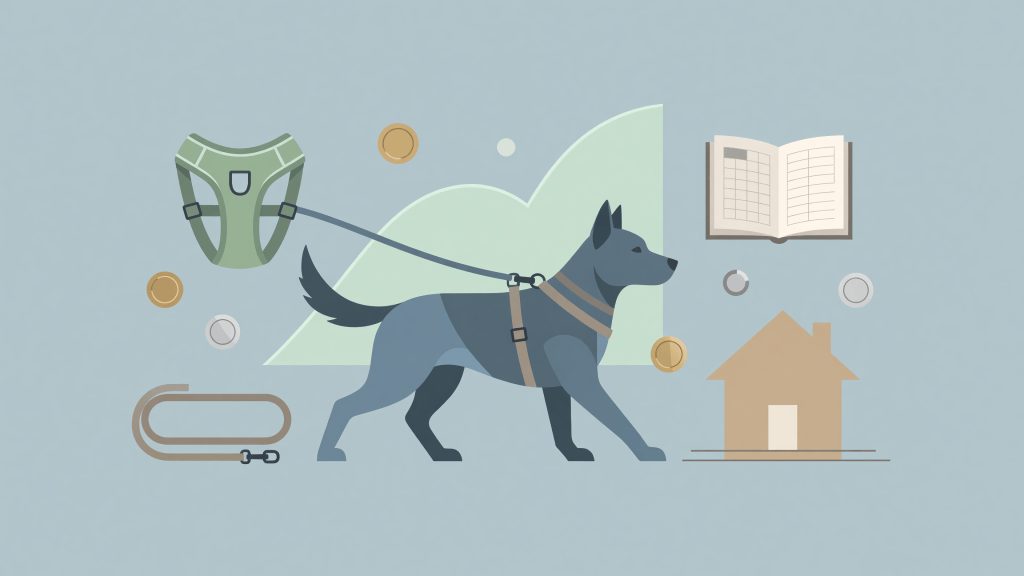
The best gear for walking a reactive dog is not about controlling your dog into submission — it’s about giving both of you the best possible shot at staying under threshold when the world decides to be a lot. If you’ve ever speed-walked the long way around a parking lot because someone’s Lab mix was sniffing near the path, you already understand. This post is for you.
Let’s talk about what’s actually in that treat pouch and why it matters — from your dog’s harness to the hoodie you grab on a bad brain day.
Harnesses for Reactive Dogs: Front-Clip, Back-Clip, and Why It Matters
A harness is often the first piece of reactive dog walking equipment people upgrade, and for good reason. Flat collars put pressure on the neck, and for a dog already running on a nervous system that’s turned up to eleven, throat pressure during a reactive moment is the last thing you want.
Here’s a quick breakdown of the main options. The “best no pull harness for reactive dogs” depends less on the brand and more on the body type of your dog and how you walk together.
| Harness Type | Best For | Reactive Dog Consideration |
|---|---|---|
| Front-clip harness | Dogs who lunge toward triggers | Redirects the dog’s body toward you — great for engage-disengage work |
| Back-clip harness | Dogs who startle and bolt sideways | Less steering control but gentler for sensitive dogs; good for decompression walks |
| Dual-clip / Y-front harness | Most reactive dogs mid-training | Attach a double-ended leash for better communication without restriction |
| Head halter | Strong dogs where handler safety is a concern | Requires patient conditioning; never used as a first-day tool |
Whatever harness you choose, it should fit snugly without restricting shoulder movement — your spicy dog needs to be able to move freely enough that the harness itself doesn’t become a stressor. If they’re whale-eyeing you every time you clip it on, that’s worth addressing through counter-conditioning before anything else.
For more on how to introduce new gear without adding stress, this guide on low-stress gear introduction walks through the process step by step.
The Best Leash for Reactive Dogs: Length, Material, and the Double-Ended Setup
Your leash is your communication line. For reactive dog leash training, length and material both matter more than most people expect.
A standard six-foot leash is the workhorse. It gives enough buffer to let your dog sniff and decompress without putting you close enough to passing triggers that you’re already in trouble. Flexi leads — those retractable ones — are not the move for reactive dog walks. The unpredictable length makes threshold management nearly impossible, and the thin cord doesn’t give you any tactile feedback.
Biothane leashes (a coated webbing material) have developed a devoted following in the reactive dog community because they’re waterproof, easy to wipe clean, and don’t absorb anxiety-sweat the way nylon does. Yes, that is a real consideration. Your treat pouch has seen more action than your actual wallet this month — your leash might as well hold up.
The double-ended leash setup — one clip to the front ring, one to the back — is worth trying once you and your dog are comfortable with the harness. It gives you gentle steering toward you on the front clip while the back clip keeps things stable. Many handlers working the engage-disengage game find it gives them just enough body guidance to mark the moment their dog chooses to look away from a trigger.
Tools for Managing a Reactive Dog on Walks: The Supporting Cast
Beyond harness and leash, there are a few other pieces of reactive dog training gear that don’t get enough credit.
Treat pouches with a magnetic or wide-mouth opening. When you have maybe a two-second window to mark and reward your dog for disengaging from another dog across the street, fumbling with a zipper is not an option. A pouch that opens with one hand and sits at hip height is worth every penny.
A yellow leash or yellow ribbon. This is not a cure, and it won’t stop every “he’s friendly!” charging dog situation — nothing will, unfortunately. But the Yellow Dog Project has given a visual shorthand that many dog owners now recognise: yellow means give us space. It’s a communication tool, not a failure sign. It says “we’re working on it” before you even have to open your mouth.
A muzzle, properly conditioned. If your dog’s reactivity has ever included teeth, or if you’re navigating high-density environments like apartment hallways or vet waiting rooms, a well-fitted basket muzzle is a safety tool and a confidence tool for you. The key word is conditioned — your dog should be choosing to put their nose in that muzzle for a treat before it ever goes on in a stressful situation. Our muzzle training guide covers the desensitization steps at a pace that actually works.
High-value treats in meaningful variety. Kibble is not going to cut it when there’s a German Shepherd approaching at ten o’clock. Real meat, cheese, or commercial training treats with a strong smell are what your dog’s aroused brain can actually register. Keep your decompression walk rewards lighter; keep your threshold-pushing rewards potent.
What to Wear When Walking a Reactive Dog (Yes, This Is Real Gear)
Handler gear rarely gets its own section, but it should. How you dress for a reactive dog walk is functional, not vanity.
Pockets. You need pockets. Jacket pockets, vest pockets, legging pockets — anywhere you can stash a backup treat bag, your phone for quick U-turns on Google Maps, and your keys without jangling them. A treat pouch worn at the hip keeps your hands free for leash handling and the all-important “watch me” cue.
Comfortable shoes matter more than you think. Reactive dog walks involve a lot of pivoting, backing up, crossing the street three times in one block, and the occasional full sprint in the other direction. You are not window shopping. Shoes that let you move without thinking about them are part of your management plan.
A number of reactive dog owners have started wearing apparel that communicates their situation — shirts and hoodies that say things like “My dog needs space” or “Reactive dog — please don’t pet.” Like the yellow leash, this creates a visual boundary before verbal communication is required. It also does something quieter: it tells you that you belong to a community of people who get it. That matters after a hard walk.
If you’re building out a full reactive dog management plan — gear, training structure, and all — the beginner-friendly guides at The Skill Mill are written for real owners, not trainers. No jargon overload, no shame, just the practical next steps.
For additional foundational resources on dog behavior and welfare, the American Kennel Club maintains a range of behavior and training reference material worth bookmarking.
For science-based guidance on dog body language and stress signals, the International Association of Animal Behavior Consultants provides practitioner resources and owner-facing materials useful for anyone working with a reactive dog.
Frequently Asked Questions
What is the best harness for a reactive dog who lunges?
A front-clip or dual-clip Y-front harness gives you the most steering ability during a lunge without putting pressure on the throat. Pair it with a double-ended leash for the best communication during counter-conditioning work.
Is a head halter safe for a reactive dog?
A head halter can be a useful safety tool for strong dogs, but it must be introduced slowly through counter-conditioning — never slipped on cold. An abrupt lunge on a head halter without proper conditioning can injure the neck, so take the introduction at your dog’s pace.
Do yellow ribbons and yellow leashes actually help on walks?
They help by communicating your needs before anyone approaches, which reduces some low-stakes encounters. They do not stop off-leash dogs or owners who aren’t aware of the signal. Think of them as one layer of your management plan, not the whole plan.
What treats work best for reactive dog desensitization walking tips in practice?
High-value, smelly, real-food treats — small pieces of chicken, cheese, hot dog, or commercial training treats with strong odor — register better in a dog’s aroused brain than dry kibble. Save the potent stuff for threshold moments and use lower-value treats on calm, easy decompression walks.
Are muzzles cruel to use on reactive dogs?
A properly conditioned basket muzzle is not cruel — it’s a safety and management tool that allows dogs to pant, drink, and take treats. The conditioning process, not the muzzle itself, determines whether your dog experiences it as stressful or neutral. Many reactive dog owners find muzzle training actually lowers their own anxiety on walks, which their dog picks up on.
What should I keep in my pockets on a reactive dog walk?
A backup stash of high-value treats, your phone (for route changes and emergency contacts), your keys in a non-jangling pocket, and ideally a small visual barrier like a clipboard or training target stick if you’re working on blocking your dog’s line of sight to triggers. Your main treat pouch should be on a hip clip, hands-free.
Building out your reactive dog walking equipment kit takes some trial and error — every spicy dog is different, and what works for one big-feelings dog on a suburban street might not work for another in a dense apartment building. Living in a high-density building with a reactive dog brings its own gear and management considerations worth reading through.
What piece of gear made the biggest difference for your reactive dog walks — or what are you still hunting for? Drop it in the comments. This community figures things out together.
{“@context”:”https://schema.org”,”@type”:”BlogPosting”,”headline”:”The Best Gear for Walking a Reactive Dog: What Actually Helped Us”,”description”:”Discover the best gear for walking a reactive dog — harnesses, leashes, and handler equipment that actually help you stay under threshold on every walk.”,”keywords”:[“best harness for reactive dogs”,”leash training a reactive dog”,”reactive dog walking equipment”,”no pull harness for reactive dogs”,”how to walk a reactive dog safely”,”reactive dog training gear essentials”,”best leash for reactive dogs”,”tools for managing a reactive dog on walks”,”reactive dog desensitization walking tips”,”what to wear when walking a reactive dog”],”datePublished”:”2026-08-05T17:34:18.228Z”,”dateModified”:”2026-08-05T17:34:18.228Z”,”author”:{“@type”:”Organization”,”name”:”The Skill Mill”},”mainEntityOfPage”:”https://blog.theskillmillbooks.com/the-best-gear-for-walking-a-reactive-dog-what-actually-helpe/?utm_source=skillmillblog&utm_medium=blog&utm_campaign=reactive-dog-training&utm_content=the-best-gear-for-walking-a-reactive-dog-what-actually-helpe”}
Tools that help: kdp_leash_training · kdp_nosework.


Leave a Reply