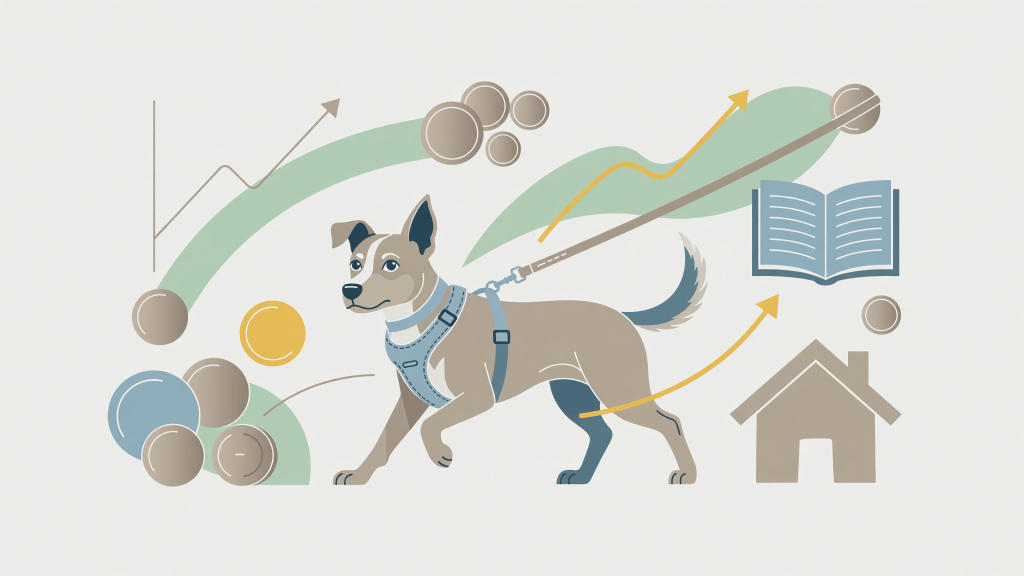
The best gear for walking a reactive dog isn’t about finding a magic tool that turns your spicy dog into a golden retriever. It’s about building a setup that keeps you both safe, gives you more control at threshold, and — honestly — reduces the mental load on you as the handler. Because you already have enough to think about when that off-leash lab comes charging around a corner with its owner yelling “he’s friendly!”
This post breaks down the actual equipment that makes a difference: harnesses, leashes, and even what you wear. If you’ve been training with positive reinforcement, managing your dog’s environment, and running your own counter-conditioning plan, this gear is meant to support all of that — not replace it.
The Best Harness for a Reactive Dog: Front Clip, Back Clip, or Both
A harness is non-negotiable for most reactive dog owners. Collar pressure on a dog who is already over threshold is the last thing you want — it can increase arousal and create negative associations with whatever they were looking at. A well-fitted harness distributes pressure more evenly and gives you a safer point of contact during a lunge.
The real decision is where that clip sits. Here’s how the main options compare so you can match them to your dog’s specific challenges:
| Harness Type | Best For | Trade-Off |
|---|---|---|
| Front clip harness | Dogs who pull hard toward triggers; redirects momentum toward you | Can cause leg rubbing if fit is off; needs regular adjustment |
| Back clip harness | Dogs with good leash manners who occasionally startle; low-pressure walks | Less mechanical control during a lunge; can feel like a sled harness |
| Double clip (dual-attachment) harness | Dogs who need both redirection and stability; handler confidence | Requires a double-ended leash or coupler; slightly more setup |
A front clip harness for a reactive dog is usually the first recommendation from force-free trainers because the physics work in your favor. When your dog lunges forward, the attachment point at the chest turns them back toward you rather than letting them build momentum. That split second of redirection is everything when you’re trying to keep them under threshold.
A double clip harness goes one step further and is worth considering if your dog is large, fast, or particularly explosive at the sight of a trigger. Using both the front and back clips with a two-handled or double-ended leash gives you a backup point of control — and it means if one attachment fails under stress, you still have the other. It’s the reactive dog walking safety gear equivalent of a belt and suspenders.
Reactive Dog Leash Training Gear: Length, Material, and Why It Matters
Your leash choice is doing more work than you think. Length, stretch, and handle design all affect how quickly you can respond and how much pressure lands on your dog when things go sideways.
| Leash Option | Ideal Use Case | Avoid If… |
|---|---|---|
| Standard 4–6 ft flat leash | Everyday reactive dog walks; predictable environments | You need more buffer room for engage-disengage work |
| Traffic handle leash (short secondary grip) | High-traffic areas; moments when you need to pull your dog tight fast | Your dog is already close-working well; adds bulk unnecessarily |
| Two-handled double-ended leash | Paired with a dual-attachment harness for maximum handler control | You’re still learning the mechanics; can feel like too many variables |
| Long line (15–30 ft) | Decompression walks in low-trigger environments; recall and LAT work at distance | Busy sidewalks, near roads, or anywhere tangling is a safety risk |
The best leash for reactive dog training depends heavily on where you walk. In a tight urban environment, a 4-foot leash with a traffic handle gives you immediate control and keeps your dog close during those three-times-in-one-block street crossings. In a park doing counter-conditioning work at a distance, a long line is your friend — it lets your dog sniff and decompress while you observe triggers from far enough away that they can actually process them.
Skip retractable leashes entirely. They teach dogs that pulling extends their range, the locking mechanism can fail under sudden load, and the thin cord can cause serious injury. Not the vibe when you already have your hands full with a treat pouch that’s seen more action than your actual wallet this month.
Dog Walking Equipment for Anxious Dogs: The Extras That Actually Help
Once your harness and leash setup is sorted, a few additional pieces of dog walking equipment for anxious dogs can make a real difference — both for your dog’s experience and for communicating your needs to the outside world.
A treat pouch with a magnetic or quick-release closure is genuinely training-critical. Counter-conditioning and the engage-disengage game both require you to get food out fast — before your dog crosses threshold, not after. Belt-clip pouches that dump treats everywhere when you bend down are a tax on your nervous system. Get something that opens with one hand.
Yellow gear and space-signaling equipment — yellow leashes, harness patches, or bandanas — are a practical communication tool. They signal to approaching humans that your dog needs space, which won’t stop every “he’s friendly” sprinter, but it does start a visible conversation before someone gets close. For a deeper look at the yellow ribbon movement and what it actually means in practice, the American Kennel Club and the American Veterinary Society of Animal Behavior both offer further reading on canine communication and behavior.
Muzzles are another piece of reactive dog walking safety gear that deserve to be destigmatized. A properly fitted basket muzzle on a muzzle-trained dog is a management tool, not a punishment, and not an admission that your dog is dangerous. It’s a thoughtful layer of safety while you work through a management plan. Learn more about muzzle training in our guide: Why Muzzles Are Not Punishment: A Reactive Dog Owner’s Guide.
What to Wear Walking a Reactive Dog: Handler Gear That Does Double Duty
This is the section that gets overlooked in most gear roundups, but what you wear matters more than people admit. Handler anxiety transfers down the leash — and fumbling with your pockets or tripping over loose laces at the wrong moment can escalate a situation that was manageable a second ago.
Wear shoes you can actually move in quickly. This sounds obvious until you’ve tried to do a fast U-turn in slides. Layers help if you’re going out early morning or late evening to avoid peak trigger times — temperature management keeps you calmer, which keeps your leash hand looser.
The other layer of what to wear walking a reactive dog is about communication. A shirt or hoodie that says “give us space” or “reactive dog — not friendly” does the same work as yellow gear but at a distance that most people can read. It also saves you the breath of explaining your management plan to every well-meaning stranger who wants to know if your dog bites. They’re not small things — they’re boundary tools you wear. Check out our post on gear and gifts that actually help reactive dog handlers for specific product ideas.
If you’re building out your whole reactive dog walking toolkit from scratch, the beginner guide at The Skill Mill is a practical next step — it walks you through foundational management and training concepts in plain language, without the shame spiral that a lot of dog training content accidentally creates.
You can also find printable training logs and session trackers in the Vault & Press Etsy shop — useful if you’re the kind of person who processes their decompression walk feelings better when they have something to write in.
Want to go deeper on the training side before you worry about more gear? Our full breakdown is here: Reactive Dog Training for Beginners: Where to Actually Start.
Frequently Asked Questions About Reactive Dog Walking Gear
Is a front clip harness better than a no-pull harness for a reactive dog?
Front clip harnesses and no-pull harnesses often refer to the same design — a harness with a chest attachment that redirects your dog toward you when they pull. They’re one of the most recommended tools in force-free reactive dog training because they reduce the dog’s ability to build forward momentum toward a trigger. Fit matters enormously, so check the manufacturer’s sizing guide and adjust regularly.
What length leash is best for reactive dog training walks?
For everyday management walks in busy areas, a 4–6 foot leash keeps your dog close and predictable. For active counter-conditioning or engage-disengage work in lower-trigger environments, a long line of 15–30 feet gives you working distance while maintaining a connection. Most reactive dog owners end up owning both for different contexts.
Should I use a head halter or a harness for my reactive dog?
Head halters give significant control and some dogs do well with them, but they require careful introduction and proper fit — sudden leash pressure on a head halter can strain the neck if a dog lunges hard. They’re worth discussing with a certified force-free trainer before adding to your setup. A well-fitted harness is generally the lower-risk starting point.
Is a muzzle appropriate gear for a reactive dog on walks?
A properly fitted basket muzzle that has been introduced gradually through positive reinforcement is a legitimate safety and management tool — not a punishment or a sign that your dog is beyond help. Many reactive dog owners use them as one layer of a broader management plan while counter-conditioning work continues. The key phrase is “muzzle-trained” — the muzzle should be paired with good associations before it ever goes on for a real walk.
What does yellow gear actually communicate to other dog owners and the public?
Yellow leashes, harness patches, and bandanas are associated with the Yellow Dog Project, a global initiative that uses yellow as a visual signal meaning a dog needs space. It won’t stop every off-leash dog or every person who ignores signals, but it creates a visible cue before someone gets within range of your dog’s threshold. Think of it as a first line of communication, not a force field.
Does what I wear as a handler really affect my reactive dog’s behavior on walks?
Indirectly, yes. Handler tension travels down the leash — a tight grip, stiff posture, and anxious body language are readable to your dog and can increase their arousal before a trigger even appears. Practical handler gear (good shoes, accessible treat pouch, comfortable layers) reduces fumbling and physical tension, which contributes to a calmer leash hand. Communication wear like reactive dog shirts also reduces the social burden on you, which lowers your own stress level on the walk.
What piece of gear made the biggest difference for your reactive dog walks — was it the harness, the leash setup, or something you wear yourself? Drop it in the comments. Collective wisdom from people who’ve actually done the three-street-crossings-in-one-block walk is worth more than any gear list.
{“@context”:”https://schema.org”,”@type”:”BlogPosting”,”headline”:”The Best Gear for Walking a Reactive Dog: Leashes, Harnesses, and What to Wear”,”description”:”Discover the best gear for walking a reactive dog, including harnesses, leashes, and what to wear. Practical advice from an owner who’s been there.”,”keywords”:[“best harness for reactive dogs”,”reactive dog leash training gear”,”no pull harness for reactive dogs”,”dog walking equipment for anxious dogs”,”best leash for reactive dog training”,”reactive dog training tools and equipment”,”front clip harness reactive dog”,”what to wear walking a reactive dog”,”double clip harness for reactive dogs”,”reactive dog walking safety gear”],”datePublished”:”2026-08-09T17:31:25.022Z”,”dateModified”:”2026-08-09T17:31:25.022Z”,”author”:{“@type”:”Organization”,”name”:”The Skill Mill”},”mainEntityOfPage”:”https://blog.theskillmillbooks.com/the-best-gear-for-walking-a-reactive-dog-leashes-harnesses-a/?utm_source=skillmillblog&utm_medium=blog&utm_campaign=reactive-dog-training&utm_content=the-best-gear-for-walking-a-reactive-dog-leashes-harnesses-a”}
Tools that help: kdp_leash_training · kdp_nosework.


Leave a Reply